


3 Types of Gas Insulated Substations and How to Choose the Right One
2026-09-22
Gas-insulated substations (GIS) are widely used in modern power systems where high reliability, compact construction, and efficient use of space are important. Compared with conventional air-insulated substations, GIS uses a sealed enclosure to protect key high-voltage components from the surrounding environment.
However, GIS installations are not all designed in the same way. Indoor, outdoor, hybrid, and mobile configurations serve different project requirements. Factors such as available space, voltage level, environmental conditions, installation time, maintenance access, and future expansion should be considered before selecting a GIS solution.
This guide introduces the main types of gas-insulated substations and explains the key factors to consider when choosing a suitable configuration for a power project.
What Is a Gas-Insulated Substation?
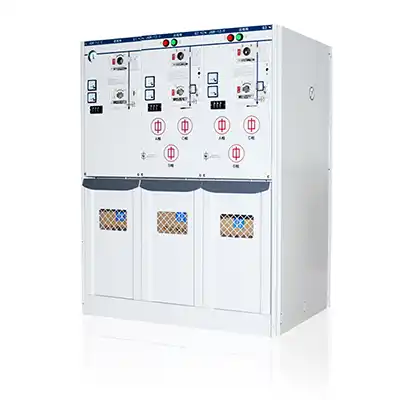
A gas-insulated substation (GIS) is a compact high-voltage substation in which major electrical components, such as circuit breakers, disconnectors, busbars, and grounding switches, are installed inside sealed metal enclosures. The enclosure is filled with an insulating medium that provides electrical insulation between energized components and the grounded housing.
Traditional GIS designs commonly use SF6 (sulfur hexafluoride) as the insulating and arc-extinguishing medium. Newer equipment may also use alternative insulating gases or gas mixtures to reduce environmental impact while maintaining the required electrical performance.
A GIS offers several important advantages:
- Compact installation: The enclosed structure requires considerably less space than many conventional air-insulated arrangements.
- Protection from environmental conditions: The sealed enclosure helps isolate internal components from dust, moisture, salt, and other external contaminants.
- Reliable electrical insulation: The insulating medium provides the dielectric strength required for high-voltage operation.
- Reduced exposure of live components: Major energized parts are enclosed, which can improve operational safety and reduce the effect of external environmental conditions.
- Suitable for demanding sites: GIS can be used where land is expensive or limited, including urban substations, industrial facilities, underground installations, and other space-constrained locations.
The choice of GIS configuration depends on the requirements of the complete substation rather than the equipment type alone. Voltage level, site conditions, available space, environmental requirements, installation method, maintenance strategy, and project schedule should all be evaluated during the selection process.
Four Major Types of Gas-Insulated Substations
Gas-insulated substations can be configured in different ways depending on site conditions, space availability, installation requirements, and project objectives. The following four configurations are commonly considered for different types of power projects.
1. Indoor GIS
Typical applications: Urban substations, data centers, underground substations, and space-constrained facilities
Indoor GIS is installed inside a dedicated building or enclosed substation room. The building provides additional protection against dust, moisture, temperature variations, and other external conditions.
Key characteristics include:
- Installed inside a purpose-built or existing enclosed facility
- Provides controlled environmental conditions for electrical equipment
- Helps reduce exposure to dust, moisture, and other contaminants
- Requires appropriate building space and civil engineering work
- Allows controlled access for operation and maintenance
Example: Indoor GIS is commonly considered for underground or urban substations where available land is limited and the substation must be integrated into a building or underground facility.
2. Outdoor GIS
Typical applications: Industrial facilities, remote substations, high-temperature regions, and projects with limited indoor space
Outdoor GIS is designed for installation in an external environment. Depending on the equipment design, GIS modules may be installed in weather-resistant enclosures or within dedicated outdoor structures.
Key characteristics include:
- Designed for outdoor installation and local environmental conditions
- Uses sealed metal enclosures to protect internal electrical components
- Can reduce the need for a large dedicated GIS building
- Suitable for projects where indoor installation space is limited
- Requires proper consideration of temperature, humidity, dust, solar radiation, and corrosion
Example: Outdoor GIS can be used for medium- and high-voltage substations in industrial or arid regions where equipment must withstand demanding environmental conditions.
3. Hybrid GIS (HGIS)
Typical applications: Substation expansion, retrofit projects, and upgrades to existing switchyards
Hybrid gas-insulated switchgear (HGIS) combines gas-insulated components with air-insulated equipment. A typical configuration may integrate GIS modules such as circuit breakers and disconnectors with air-insulated busbars or other conventional substation components.
Key characteristics include:
- Combines GIS and AIS technologies within the same substation
- Can reduce the footprint compared with a fully air-insulated arrangement
- Allows existing substation equipment to be retained in some retrofit projects
- Provides greater flexibility when upgrading an existing switchyard
- Can be considered when a complete conversion to GIS is not necessary
Example: HGIS is often considered for upgrading existing high-voltage substations where the available space, existing equipment, and project budget need to be balanced.
4. Mobile GIS / Skid-Mounted GIS
Typical applications: Temporary substations, emergency power supply, mining projects, renewable energy projects, and fast-track installations
Mobile or skid-mounted GIS is assembled and tested as much as possible before being transported to the project site. The equipment can be mounted on a skid, trailer, or other transportable platform, depending on the project design.
Key characteristics include:
- Factory-assembled equipment reduces on-site installation work
- Factory testing can be completed before shipment
- Suitable for temporary or rapidly deployed power facilities
- Can be transported and installed at different locations
- Particularly useful for remote sites and projects with tight schedules
Example: Mobile GIS solutions can support temporary power supply for remote mining operations, construction sites, renewable energy projects, or emergency grid restoration.
Comparison Table: GIS Types at a Glance
| Type | Installation | Best Use Case | Pros | Limitations |
| Indoor GIS | In building | Urban, underground | Safety, low noise | High civil work cost |
| Outdoor GIS | Open enclosure | Harsh environment, desert | Fast deployment, compact | Weather exposure risk |
| Hybrid GIS | Partial GIS/AIS | Retrofit, budget | Cost-effective, scalable | Moderate compactness |
| Mobile GIS | Skid/trailer | Temporary, remote sites | Portable, plug-and-play | Limited to ≤145kV |
How to Choose Between Different GIS Configurations
The appropriate GIS configuration depends on more than the voltage rating of the equipment. Project engineers should consider several factors, including:
- Available space: Indoor GIS and HGIS can provide different solutions for space-constrained substations.
- Site environment: Temperature, humidity, dust, pollution, altitude, and corrosion can affect equipment selection.
- Civil works: Indoor installations generally require more building and foundation work.
- Installation schedule: Factory-assembled or skid-mounted solutions may reduce on-site installation time.
- Existing equipment: HGIS can be useful when integrating new equipment into an existing AIS substation.
- Maintenance requirements: Access, isolation procedures, and available maintenance facilities should be considered during planning.
- Future expansion: The selected configuration should allow for expected changes in load and system capacity.
There is no single GIS configuration that fits every project. The final selection should be based on the electrical system requirements, site conditions, installation constraints, and long-term operating strategy.
Need More Information?
Looking for reliable electrical equipment or a suitable solution for your project? Our team can provide product information, technical support, and customized solutions based on your application requirements.
For more information, please contact us. We are ready to assist with your electrical equipment needs.
Website: www.deshsun.com
Email: [email protected]